
If you enjoy posts like this, please support my work and support independent photography tutorials like this.
When I come home with several photos of the same subject, there’s often one that I like a little better than the others. Before I give it a rating and move on, I like to ask myself why. That question helps me decide which frame to spend time editing and often gives me an idea for a photo I could make the next time I’m there.
Put Similar Frames Together
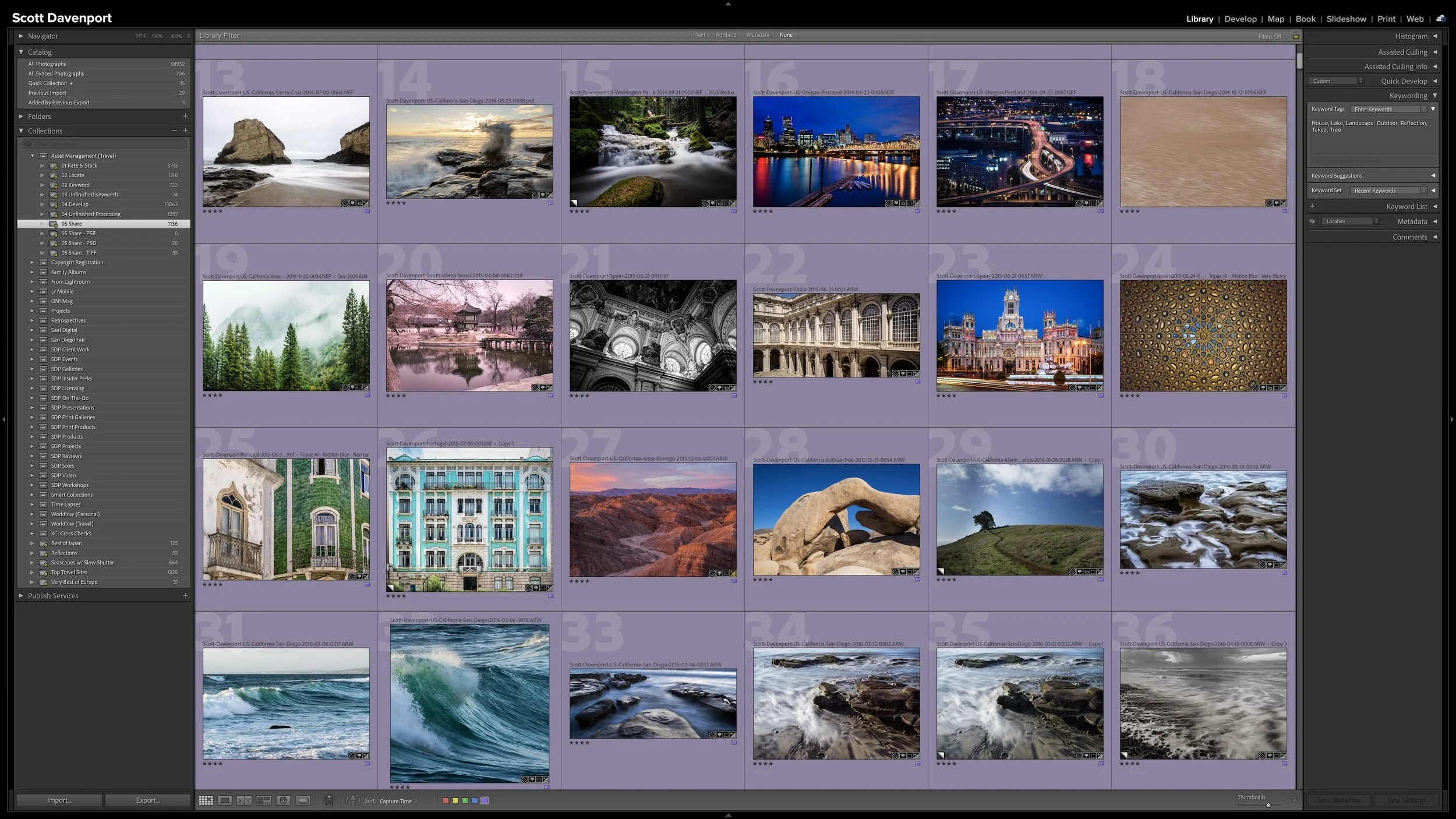
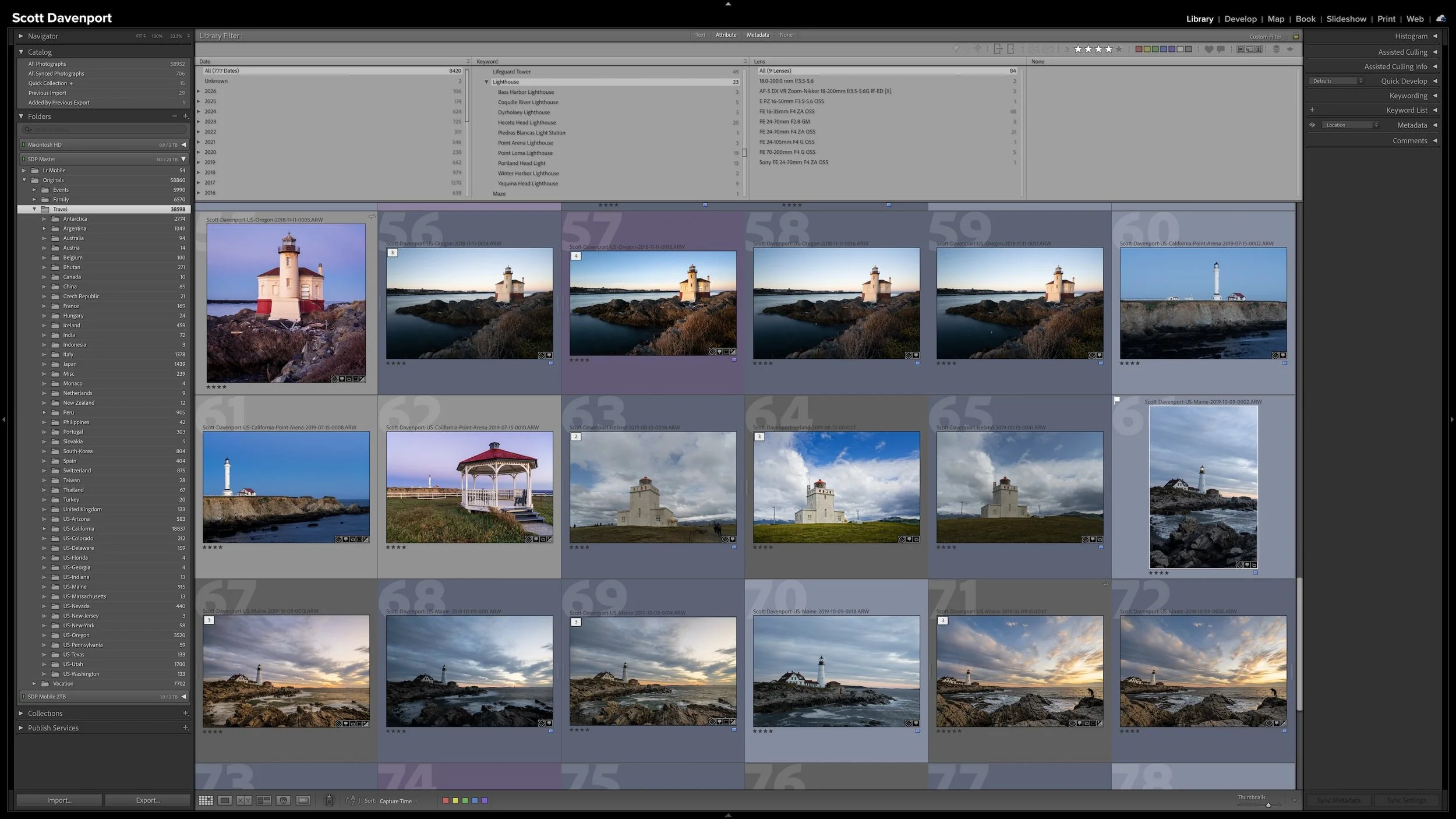
It’s easier to see what a change in camera position did when you can look at several versions of the scene together. As I was culling photos from Bodie, California, I flagged a handful of frames of the same group of buildings. Then I filtered the Lightroom grid to show the flagged photos and enlarged the thumbnails so I could compare the compositions.
With the frames side by side, I can see how the same group of buildings fits together from different positions.
See How the Framing Serves the Subject
When you compare frames, start with what drew you to the subject. Then look at how much of the frame that part of the scene gets. In Bodie, I was interested in the fronts of the buildings, especially the repeated shapes along their rooflines. In my first frame, the sky took up more room than I wanted, and part of a building at the right edge took up space I’d rather have given to the facades.
I moved closer for another frame and kept much the same angle. That version was a little stronger, but I still wanted a better view of the building fronts. Looking at those two together helped me see that both my distance from the buildings and the angle I chose mattered.
Look at the Space Between Elements
Pay attention to what the space between the main elements does for the composition. In another frame, a long stretch along the side of one building created a wide gap between the facades. I liked parts of that composition, but my eye had very little to pick up in the gap. That stretch felt like dead space and made the buildings feel disconnected.
Learn More: Negative Space Vs. Dead Space f/30
My eye goes to the building fronts, then runs into a long stretch with little to hold my attention.
Choose the Frame Where the Elements Work Together
Look for the frame where the parts of the scene you care about fit together most naturally. In my pick, I was a little tighter and there was still good light on the fronts of the buildings. The spacing from left to middle to right felt more balanced. The building on the far left played a supporting role, and the other buildings felt like a group. That was the frame I gave four stars and decided to work on.
The closer grouping lets the building at the far left play a supporting role while the other facades hold my attention.
Take the Comparison Back into the Field
Looking through the frames also got me thinking about a view from farther down the street. I could have made a similar composition from the brick building’s side. I don’t remember taking that frame, and the comparison gave me a specific idea to try the next time I’m there.
When you have room to move around a subject, try working it from both sides. It’s easier to judge what each angle does for the composition when you can sit down later and look at the frames together.
Final Thoughts
The next time you’re choosing between similar photos, take a moment to put into words why you’d edit one over the others. Look at what each frame gives the subject and how the space around it affects the composition. Once you can point to what makes your pick stronger, you have something specific to look for the next time you’re behind the camera.





When several frames of the same subject look promising, deciding which one to edit can take longer than you’d expect. Put those frames together and small differences in camera position and spacing become easier to see.
I’ll share what I look for when I compare similar compositions, how I decide which frame is worth my editing time, and how that choice helps me see another possibility for the next time I’m in the field.